

[ad_1]

Japan Airways Co, Ltd, in partnership with the Japan Aerospace Exploration Company (JAXA), and O-Effectively Company, has utilized riblet-shaped coating to the vast majority of the fuselage of one among its Boeing 787-9 plane.
Utilized onto plane JA868J, this marks the primary time within the world aviation business that the riblet coating has been used anyplace on the planet.
The plane may also be the primary completed with such a coating for use on worldwide routes.
The riblet coating plane was taken up for its inaugural flight earlier this month.
Innovation in the direction of decarbonisation
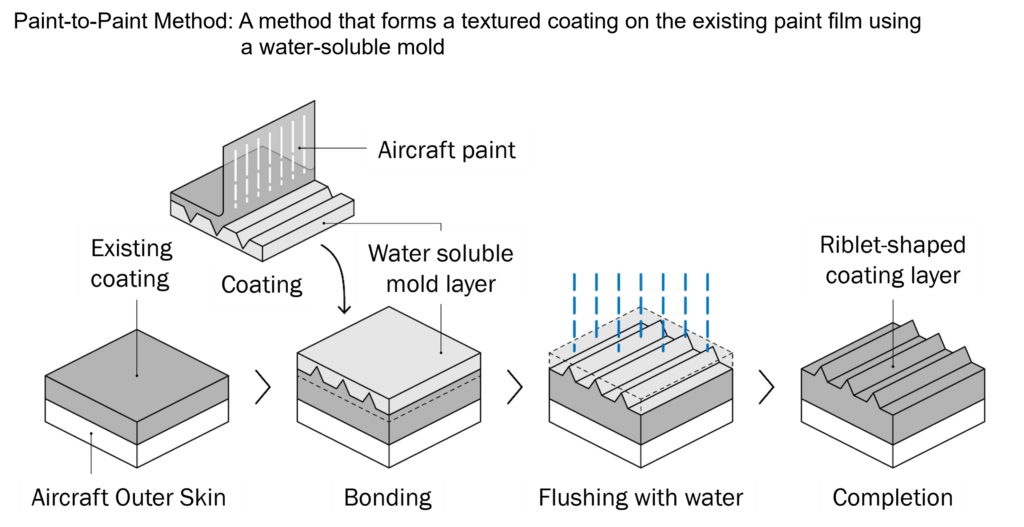
As JAL, JAXA, and O-Effectively are all selling the decarbonisation of the worldwide aviation sector, their joined groups utilized the riblet coating to the plane’s exterior utilizing the Paint-to-Paint Methodology, a expertise constantly improved by O-Effectively and JAXA, and have been validating its sturdiness and gas effectivity enchancment results.
The groups have been testing the sturdiness of the riblet coating on JAL’s home Boeing plane since July 2022.
Since November 2023, they’ve confirmed the gas effectivity enchancment results by making use of the coating to a big space of the fuselage backside.
The Paint-to-Paint Methodology, which applies riblet shapes on to the paint movie, is predicted to scale back weight and enhance sturdiness in comparison with riblet processing utilizing decals or movies.
This time, wind tunnel exams and numerical analyses by JAXA confirmed the drag discount impact on worldwide plane, and the event of a riblet coating system by O-Effectively that may accommodate bigger plane has enabled the growth of the appliance space to the higher fuselage of worldwide plane.
Lengthy-haul flights on worldwide routes are anticipated to yield additional gas effectivity enhancements.
Within the plane with the newly utilized coating, the drag discount price throughout cruising is 0.24 p.c, which is predicted to lead to an annual discount of roughly 119 tonnes of gas consumption and about 381 tons of CO2 emissions.
That is equal to the annual CO2 absorption of roughly 27,000 cedar bushes.
[ad_2]
Source link